


![[syndicated profile]](https://www.dreamwidth.org/img/silk/identity/feed.png) cbc_topnews_feed
cbc_topnews_feed
Two men tied to a trucking business in the RM of Edenwold are facing human trafficking charges after a months-long RCMP investigation. Expert are speaking out about the need for education about labour trafficking and how to spot red flags.
Boy 12, charged with attempted murder of Toronto police officer, 2 other boys also charged
Jun. 17th, 2026 04:05 pmcbc_topnews_feed
A 12-year-old boy has been charged with attempted murder after he allegedly struck a Toronto police officer while driving a stolen vehicle in the city's east end Sunday night, police say.
Did Michelle Obama sue UFC fighter Josh Hokit after he called her 'a man'?
Jun. 17th, 2026 08:33 pmsnopes_feedthe_mary_sue_feed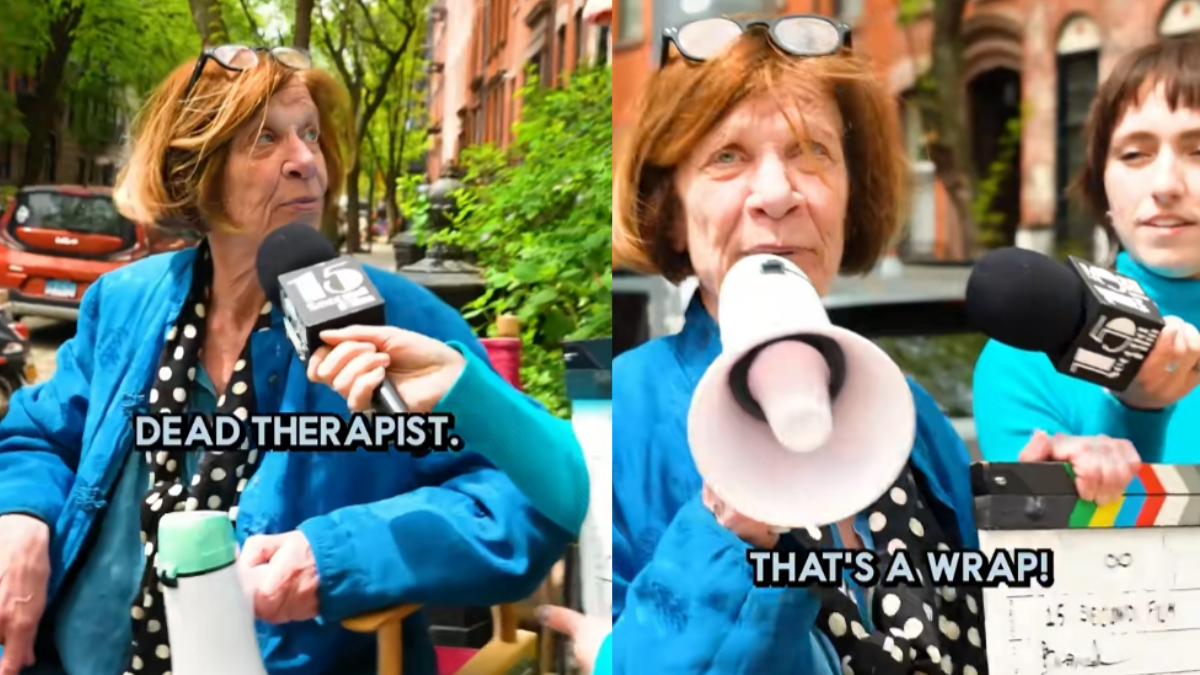
New York City has a reputation as a haven for artists, with Broadway and the world-famous Met museum right along its corners. Still, nobody would’ve expected Brenda, a woman approached by 15 Second Film (@15.secondfilm), to be a natural director.
15 Second Film on TikTok is known for approaching people to direct a short film. They have a crew and cast. All the director needs to do is come up with a plot and a short script and then direct. The small film crew has approached people from all walks of life, from a retired economics professor to an actual director.
the_mary_sue_feed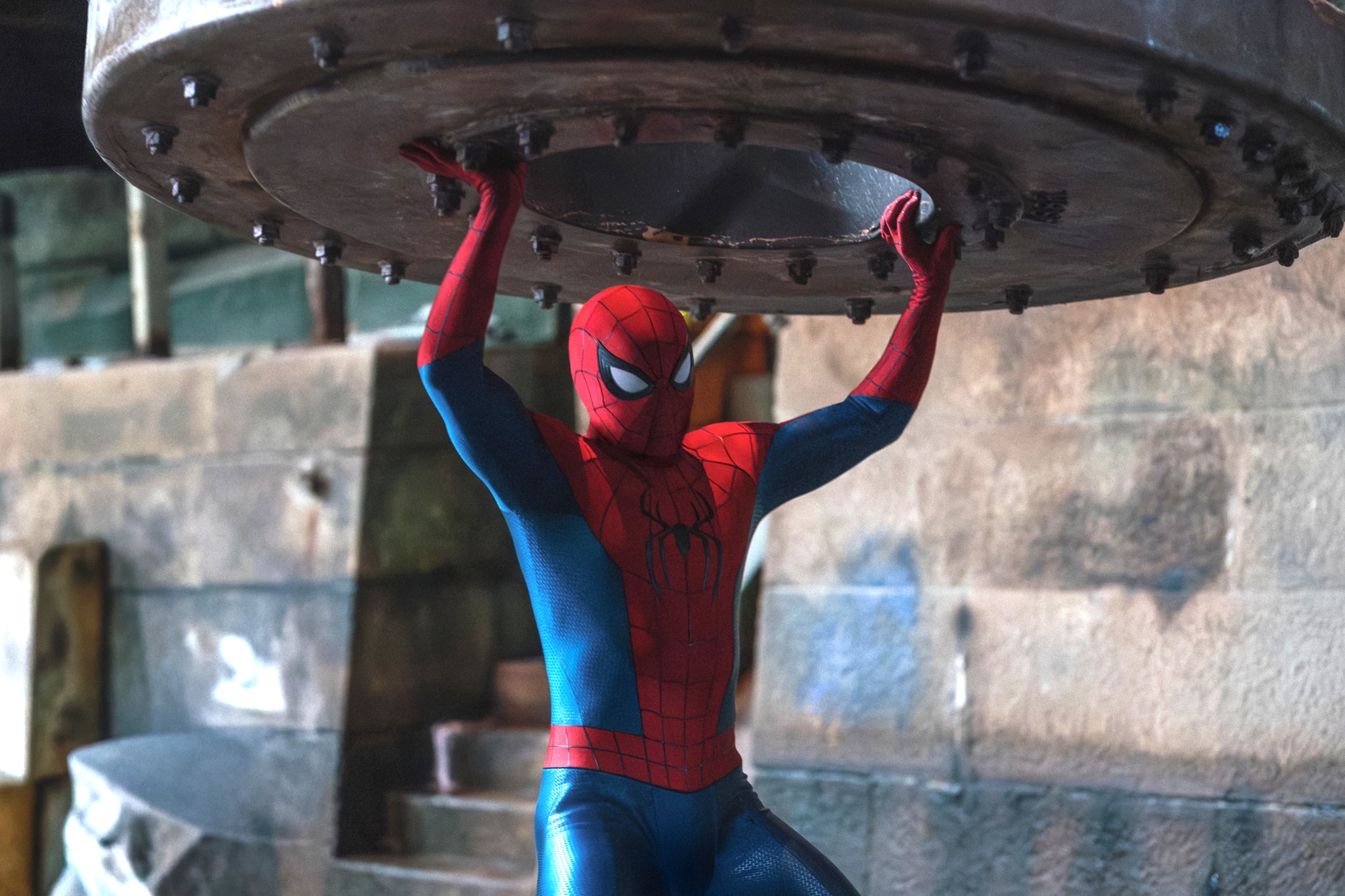
Spider-Man as a character has a lot to navigate in his life. He has a girlfriend, a superhero gig, and he often finds himself struggling to pay rent. In some worlds, he even works at a pizza place to pay the bills. And the new trailer for Spider-Man: Brand New Day has a fun nod to the Tobey Maguire films. AKA Tom Holland destroys a “Gen’s” Pizza sign that looks a lot like “Joe’s”.
As Peter is crashing into a building, he takes on the sign that looks a lot like Maguire’s former employer. Sad day for good pizza. But it does kick the new trailer off with quite the bang. We know from previous trailer that Peter Parker’s Spider-Man is evolving. But what exactly does that mean? We don’t know and this trailer only gave us a little more insight into that.
Mid-week ketchup
Jun. 17th, 2026 04:43 pm![[personal profile]](https://www.dreamwidth.org/img/silk/identity/user.png) rolanni
rolanniWhat went before -- Tuesday: Saw Disclosure Day.
I have ... mixed feelings.
On the one hand -- looks pretty, gets on its bike and rides, and -- granting that I have no idea what it means -- the actors did a good job. And a plea for empathy is always in order, especially now, when empathy -- Well. Paraphrasing Gabriel in Good Omens 2: If we have empathy, how will we know who won?
There are two Steven Spielberg movies that have been benchmarks of their kind for me, since forever: one was ET, the other was Close Encounters.
I really liked ET even knowing at the time that the storyteller entertained a vastly more positive view of humanity than I did.
Close Encounters? Made me nuts on so many levels.
Disclosure Day sits in the middle -- ET's earnest belief that innocence and goodwill shall triump; and Close Encounters' Imma scrape every nerve you have and leave you shaking with rage.
There was some good storytelling, and some o-so-stupid storytelling born of sheer wishful thinking on the part of the storyteller.
On the plus side, a bit of the movie was set in Sykesville Maryland, which happens to be in my old neighborhood. "Silver Spring 20 miles."
Gotta go get something to eat.
#
Man, the car's GPS hates Bath. I dunno, maybe it gets its brains scrambled by all the noise and metal and whatnot at the Iron Works.
I'm somewhat chagrined to find that, after a lifetime of people asking me if my blood pressure was always this low? It's now high enough to require drugs -- lisinopril, which Steve took, though a lesser dose, because it was treating a different condition.
I did have a very pleasant drive coming and going, down Rte 197 and thoseways along rivers and past lakes, through a pretty day with a blue sky. I did stop at the Maine Maritime Museum and took a stroll around the grounds to both soothe my temper (ref uneasy relationship between GPS and Bath), and enjoy the day before driving home.
Chores have been done, and I'm getting ready to knock off for the day.
And tomorrow -- I write.
How's everybody doing?
Trump says he'll delay nomination for Clayton to be his next intel chief
Jun. 17th, 2026 03:55 pmcbc_topnews_feed
U.S. President Donald Trump on Wednesday derailed the confirmation process of his own nominee to head the nation's intelligence agencies, an extraordinary move that upended Senate efforts to renew a crucial surveillance program that expired last week and fuelled fresh tensions with fellow Republicans on Capitol Hill.
Opposition parties up in arms as Liberals use majority to speed up legislation before summer
Jun. 17th, 2026 03:54 pmcbc_topnews_feed
With only days left before MPs head back to their ridings for the summer, the Liberal government is aiming to pass key pieces of legislation while it can — but the legislative rush has opposition parties crying foul.
Yellowknife hockey players say changes to team structure for girls are offside
Jun. 17th, 2026 02:56 pmcbc_topnews_feed
The Yellowknife Minor Hockey Association plans an overhaul to its structure, getting rid of female-only development teams, an option for more elite players, in favour of what it's calling a travel team model.
As wildfires grow, tiny fire-loving fungi could hold the key to a landscape’s recovery
Jun. 17th, 2026 04:00 amcbc_topnews_feed
Within weeks of a wildfire, an orange crust coats deadwood and the charred forest floor, creating an otherworldly landscape that still seems to be smoking. But instead of continued destruction, it’s a signal of rebirth: tiny fungi are colonizing the wreckage.
Is comedian Nate Bargatze a Trump supporter? What we know
Jun. 17th, 2026 08:15 pmsnopes_feedthe_mary_sue_feed
A woman who uses a wheelchair almost got kicked off a flight because she didn’t have a second individual flying with her. Then passengers banded together to keep her onboard.
Amberley Snyder, a barrel racer who inspired the 2019 drama Walk Ride Rodeo, said she was traveling with Contour Airlines when she was approached and told she might have to leave the plane. According to employees who approached her, she needed someone with her at “all times” in case of emergency. Because she didn’t have a person directly assisting her, higher-ups allegedly told the employees to rebook her flight.
the_mary_sue_feed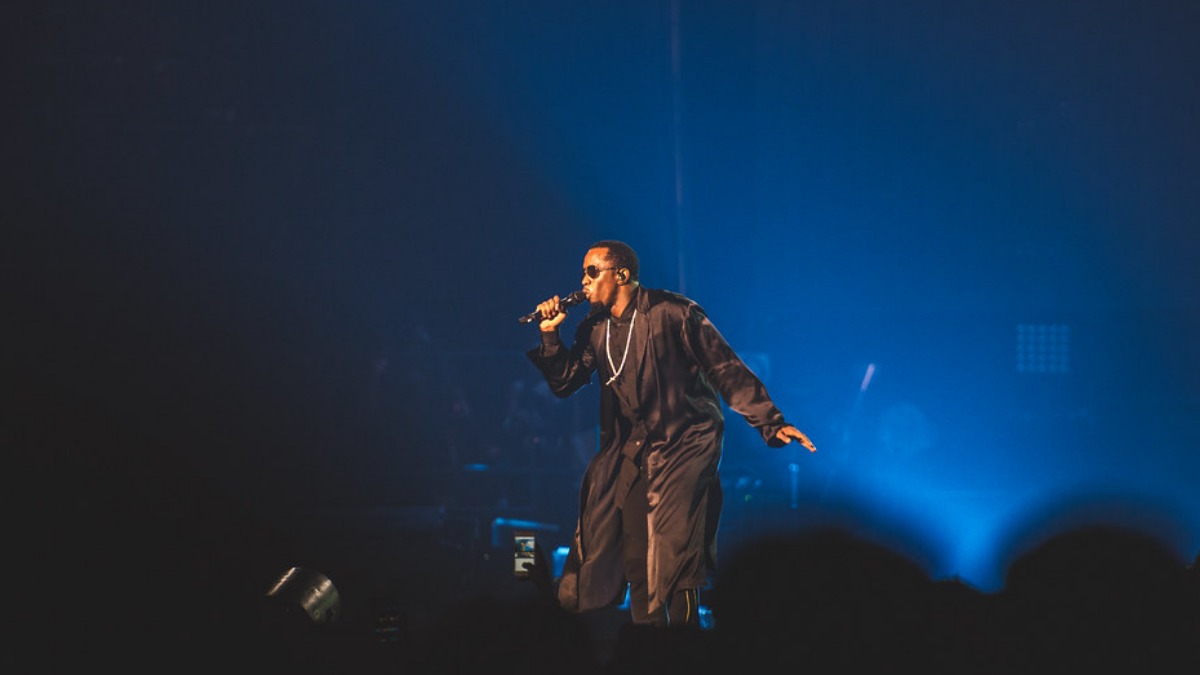
Federal prison officials just moved Sean “Diddy” Combs’ release date up again, this time to February 23, 2028. The 56-year-old rapper is currently serving a 50-month sentence after being convicted of sex trafficking, racketeering, and transportation for prostitution, but his exit from prison keeps getting pushed earlier. The shifting timeline is raising questions about how much earlier he might actually walk free.
According to Reality Tea, this is the fourth time his release date has been adjusted. It was originally set for June 4, 2028, then moved to April 25, 2028, then April 15, 2028, and now February 23. The changes come as Diddy participates in the Residential Drug Abuse Program, or RDAP, which can shave up to a year off a sentence for those who complete it. His legal team says he’s taking the program seriously, calling it part of his “focus on growth and committed to positive change.”
Northern stars
Jun. 17th, 2026 03:39 pmnineweavingrushthatspeaks and I drove up to Montreal for Scintillation, Jo Walton’s little jewel of a convention. Our last trip north was a nightmare, through whiteout and on heart-stoppingly icy roads in a cranky electric car that needed charging minute for minute of driving. This time, the travel went as smooth as silk (save for an hour’s queue at the border going south). Green mountains, great clouds, conversation.Scintillation is a great little con: intellectually intense, collegial, and gender-diverse. There is a panel room and a reading room, and for rest and recreation, a tea room and a jigsaw puzzle room. (I think we collectively finished three or was it four? Including this beauty.)
For my part, I did a talk on The Art of Greer Gilman. I read little passages from the books as facing-page texts.
These clayfolk are from my childhood, from Saturday morning art school classes.

And this is the poet Idony Caldwell from Lightwards, whom I drew last week.

I was also on three panels.
Is Translation Possible? As an argument against, I brought a blow-up of my Italian Moonwise cover.

(When I bewailed this to Caroline Stevermer back then, she misheard me. “A Bembo? How wonderful!” she said, envisioning a 15th century tarot card. “Which one?” I think the Bradamante in buskins is meant for Annis, but I can’t quite place the malevolent Munchkin with the golf club. Or the Jurassic Jabberwock.)
Writing Weird POVs, which was stellar. I recalled Wendy Walker’s The Secret Service (1992), set in a quasi-18th century Europe, where Great Britain’s secret agents metamorphose into objects: a crystal goblet on a cardinal’s table, a rose bush, or a statue of Thisbe.
How Do You Structure a Book? on which all five panelists could only describe our own processes in increasingly wild metaphors: kaleidscopes, clockwork, Fibonacci spirals, patchwork, fugues ... Fascinating.
I saw excellent panels on A Good Read, Neologisms, Trace Elements (the new book of critical essays by Jo Walton and Ada Palmer), What is it we love when we love SF?, The train to Aisnar (on Le Guin’s Orsinian Tales and Malafrena), Books That Are Impossible to Recommend, and What Can We Learn from Gene Wolfe?
rushthatspeaks did a lovely interview with Sherwood Smith.A group of us went to a fabulous M. C. Escher exhibit, with prints from his full career—tessellations, tangles, and impossibilities—with excellent wall text. I got a folder printed with the hands drawing hands.
There is spectacular eating on Montreal. Culinarily, I wasn’t as adventurous as many (not for lack of curiosity, but planning), but fortunately, the hotel is at the heart of Chinatown, half a block from streets of restaurants, bubble-tea shops, and bakeries. I had good dumplings, bao and egg tarts, and banh mi. And as a last hurrah, terrific dim sum on Monday.
Nine
Trump's Iran war ends where it started - or worse
Jun. 17th, 2026 10:49 pmkiaa posting in ![[community profile]](https://www.dreamwidth.org/img/silk/identity/community.png) talkpolitics
talkpoliticsThe main outcome being celebrated is the reopening of the Strait of Hormuz. But the strait was open before the war began, so this merely restores the previous situation after a conflict that reportedly cost tens of billions of dollars, thousands of lives, and large amounts of military equipment.
Looking at America's original objectives, it's hard to identify any clear victories. Iran's nuclear program remains unresolved, its enriched uranium stockpile is still an issue, and future negotiations will determine what happens next. The regime itself survived, despite the loss of senior figures, and appears to have been replaced by even more hardline leadership. Iran's missile arsenal was damaged but not destroyed, while its regional proxy network remains largely untouched.
Yes, Iran's conventional military took serious losses. Its air force and many military facilities were hit hard. But Tehran seems to have accepted those costs in exchange for preserving what mattered most: the regime's survival and its strategic leverage.
In fact, Iran may now hold stronger cards than before. Its ability to threaten shipping through the Strait of Hormuz demonstrated just how much influence it can exert over global energy markets. That leverage will likely shape future negotiations and may make Tehran less willing to compromise.
From my perspective, Trump was looking for a way out of a war that was becoming increasingly costly and risky. The ceasefire reduces the danger of a wider economic crisis and gives Washington an off-ramp. But if the goal was to eliminate Iran's nuclear ambitions, topple the regime, destroy its missile capabilities, or curb its regional influence, the results so far fall well short of those ambitions.
The war ended largely where it began, except that both sides are now poorer, thousands are dead, and Iran appears to have gained new bargaining power.
Did Knicks decline White House invitation after winning NBA championship?
Jun. 17th, 2026 07:39 pmsnopes_feedthe_mary_sue_feed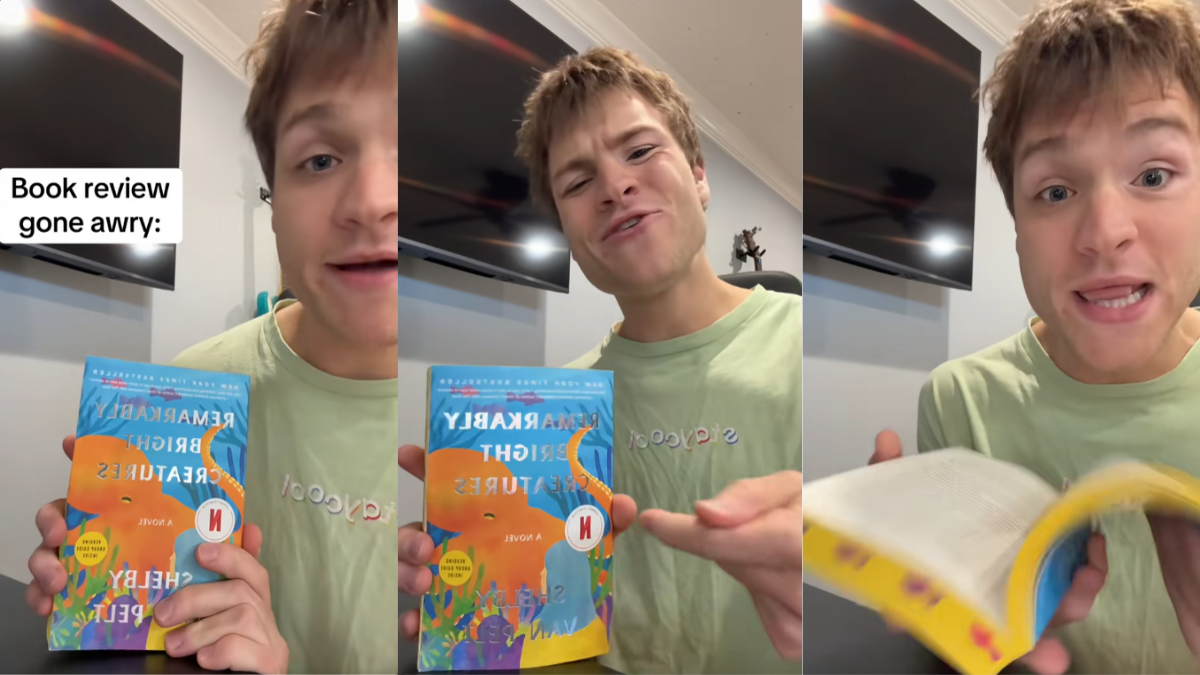
Remarkably Bright Creatures by Shelby Van Pelt recently became a Netflix adaptation, sparking book reviews on TikTok. While book reviews on BookTok are usually informative and straightforward, Anthony Koz’ (@anthonykoz) commentary took a turn nobody would expect.
In his review of the recent adaptation captioned “book review gone awry,” Koz had a copy of Remarkably Bright Creatures in hand. Before starting his review, he made a comment that such creatures are “definitely not” found in the government.