sabotabby: gritty with the text sometimes monstrous always antifascist (gritty)
God help me I'm going to hold forth on art history again. This is mainly instigated by a friend elsewhere, who challenged my statement that the aesthetics of AI are inherently fascist. I respect his challenge, and I want to respond with something other than "vibes" so I'm going to go off half-cocked and attempt to draw an historical parallel with the OG fascist movement.

I know more a little more than a normal amount about Italian art. I would argue that it peaked not in the Renaissance but in the Baroque era (source: vibes), but Italian artists have been chasing that high ever since, as has every other artist in the Western world. You can't really blame them.

Michelangelo_-_Creation_of_Adam_(cropped)

Artemisia-Gentileschi-Judith-Holofernes-top

Don't get me wrong, I stan my gay king Michelangelo. But I find Gentileschi a far more interesting artist. Sue me.

more about art )

So what does this have to do with AI and why I think, based on my vibes, that AI is fascist? It goes back to the pattern I suggested in both Italian Futurism and Russian Constructivism. An avant-garde art movement meets a nascent political movement, the former gleefully attaches to the latter, only to be betrayed when the latter comes to power in favour of more conservative aesthetics. 

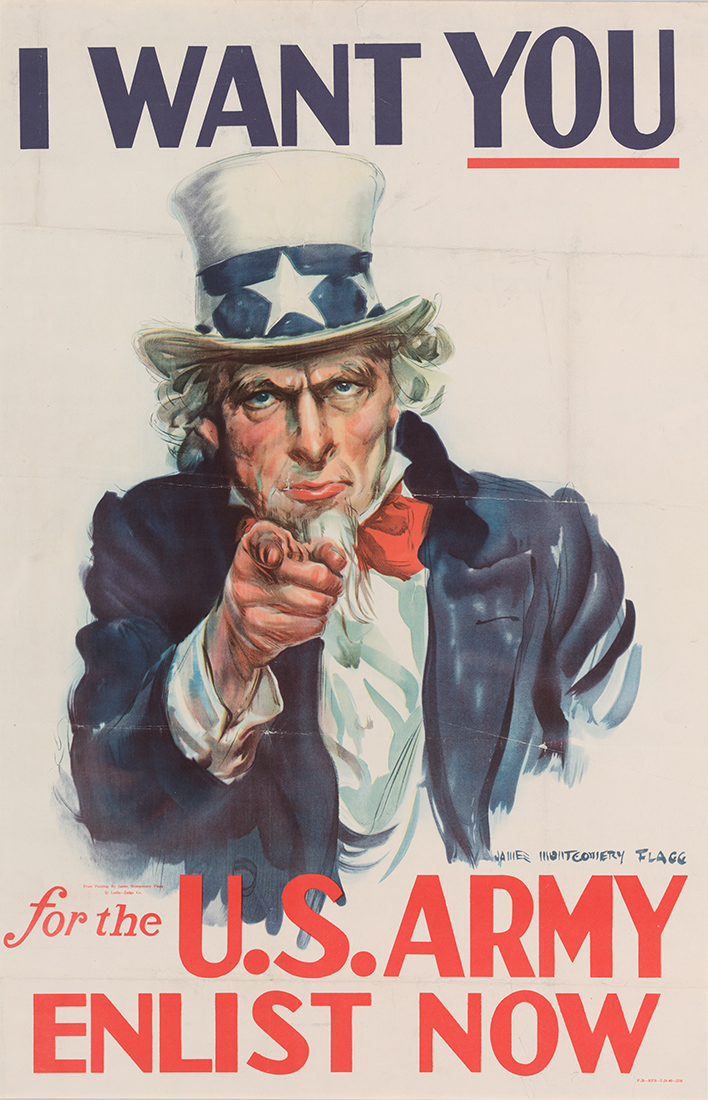
And this is what I witness happening in the visual iconography of modern-day fascism. Let's take a trip down the rabbit hole to, say, 2014-2016. What's the ascendent visual style of the alt-right? It's janky, ugly-on-purpose, constructed with the most basic tools available, edgy and debauched. It's creative—evil, yes, but it's doing something different and exciting, so much so that it escapes containment. In 2025, what is the visual style of fascism? Slick, corporate, but unnerving. Too perfect in that Uncanny Valley way. More beholden to Thomas Kinkade than to Matt Furie. It feels off, because its proponents want the symbolism of power without a particular deep interest in the structure and the foundations of the aesthetic. An arcade of Roman columns that, when you turn sideways, is nothing more than a Western movie film set facade, all plywood that whole time. 

Fascists are simple creatures; they want art that they can understand, none of that high-falutin' Jew degenerate modernist stuff. The problem is that artists, left alive long enough, will tend to change and innovate. They'll fall in love with the art of other cultures. They'll create community. Fascists want art without artists; art that doesn't show the brushstrokes or enable bohemian lifestyles, art that is frictionless and vapid. It's fitting to me that one of the plagiarism machines is called DALL-E because Dalí would have genuinely approved. Mussolini would have wet his pants over AI's potential, at once forward-looking and reactionary, relying on regression to the mean in all things. 

Just like the Futurists of yore, the unruly and radical propagandists of 4chan have been abandoned by the same forces they put in power. Their innovation is no longer necessary. They're not even worth subjecting to the Night of the Long Knives.

The ugliness of this aesthetic doesn't even breach the top three reasons to always oppose AI, obviously. That's the environmental holocaust that it unleashes, the use of the technology to target apartment buildings in Gaza or immigrants in the former USA, the mass unemployment it threatens to unleash, and the wholesale theft of creative work. But it's also ugly in the way that the art of totalitarian regimes tends towards ugliness, bereft of a culture of experimentation that makes for great art. And that's why I think it's fascist rather than simply boring.
sabotabby: gritty with the text sometimes monstrous always antifascist (gritty)
 I made a comment in my AI post the other day that a few of you rightly took issue with, which was that AI art is shitty and the world doesn't need more shitty art. Take a bow if you called me out on that because you're correct and I was not—shitty art is a stepping stone to good art. Shitty art—made by humans—is valid even if it's not a stepping stone to good art. Having recently been the recipient of a shiny new Apple Pencil, I am currently teaching myself Procreate, and I've never really done digital illustration before. Are my drawings on it as good as my acrylic paintings? Not remotely. I have a baseline competence at drawing, so they don't look like shit or anything, but I'm learning the tools and it shows. Am I absolutely just doodling random people on transit, TTRPG characters, and characters from my books? Yup. Am I having fun? Well, that's the important thing, isn't it?

(Why are you harshing on people playing around on AI, then, [personal profile] sabotabby ? Because it is destroying the fucking planet and killing jobs. Covered that already.)

The word I should have used is mediocre, and even that is problematic, because there's a place for mediocre art too. Sometimes I want to kick back with a competently made Marvel movie. But there are definitely enough people making good-enough-but-not-creative art that I don't see a need to add to it, and I would argue that even mediocre art needs great art to inform it. Marvel movies don't exist without George Lucas' original Star Wars movies, which were actually good and innovative, and MCU occasionally still does something mildly interesting. But they have been getting progressively worse due to model collapse, which is to say that they're cannibalizing their own work and shitting it back out rather than incorporating new influences, and it shows.

I want to ramble a bit about my favourite periods of art history, as I am wont to do. Let's talk about 1896, and Tsar Nicholas II's coronation. About half a million Russians attended. The thing you have to understand about turn-of-the-century Russian peasants is that most of them loved the tsar. It's easy to love a tsar; you almost never meet them face-to-face. It's your feudal lord doing the oppression, and if the tsar knew, well, he'd never allow it. So you can imagine that many jumped for the chance to actually be in the guy's presence. They were also giving out free food and drinks—sure, it's not Elon Musk's million dollar cheques, but to a starving population, it's not nothing. The problem is that neither the tsar nor any of his officials gave any more of a flying fuck about the peasants than Musk or Trump and so they didn't bring enough, and in the rush to get fed, 1400 people were trampled to death, and thousands more injured, in a country with a healthcare system that was presumably no better than modern-day America's.

So when I say nice things about the Russian Revolution, especially in its early days, it's not out of any love for the USSR. It's that every bit of violence that happened, all the crimes against humanity that followed, were a direct result of a political system in which it was fully unremarkable for over a thousand people to die in a single day simply to flatter an inbred tyrant's ego. You can't blame the early communists for at least trying a different thing.

The art of the early Russian Revolution is some of my favourite that has ever existed in the world. You can tell it's great because it has staying power despite looking like nothing before or since. Witness Eisenstein's Odessa Steps sequence in Battleship Potemkin, or Mayakovsky's Porky meme, or Lissitzky's minimal masterpiece, Beat the Whites With the Red Wedge. The one closest to my heart, Tatlin's Monument to the Third International. These are works of genius, really groundbreaking work for a moment where such innovation was possible, even desirable.

And within a few decades, it was gone. Both literally and aesthetically, the rulers of the country were back to murdering peasants. The artists were in exile, or dead, or forced to do boring-as-shit socialist realism, Stalin's preferred style. I once went to a museum where they had the largest collection of Stalinist era art, and they described what was basically a factory, in which each artist specialized in painting the leader's nose, or eyes, or moustache. Alienation of labour, as Marx would have it. By the time World War II broke out, Russia's propaganda looked barely better than that of America or Britain or Germany None of those are artistically bad, per se, and to a degree the context has made them enduring. But they're mediocre compared to Beat the Whites With the Red Wedge. Something about war and nationalism tends towards samey-sameness, the laziest kind of imagery. Real lizard-brain garbage. You'll see fascists resorting to this aesthetic again and again, and AI has made sure all your feeds are flooded with it.

A similar devolution occurred in Italy, though Italian art under Mussolini never quite reached the depths of socialist realism under Stalin. The Futurists were radicals, for whatever good or bad that entailed. Beginning as anarchists, they turned fascist and got their guy into power. Their guy, as it turned out, preferred derivative art, and ordered them to stop being so fucking weird. Unlike most of the Russian Constructivists, they largely complied, and thus died of silly things like falling off horses. I'm sure nothing that happens with 8chan or the Proud Boys will echo this trajectory.

(But Sabs! Sabs! What about Nazi Germany! They were the worst but they had Leni Riefenstahl, who is at least as important as Sergei Eisenstein. To which I will reply that 1) she was nowhere near as interesting as a filmmaker even if she was talented, and 2) they had the Degenerate Art Exhibition, proving that with the occasional exception, they mostly still had terrible taste.)

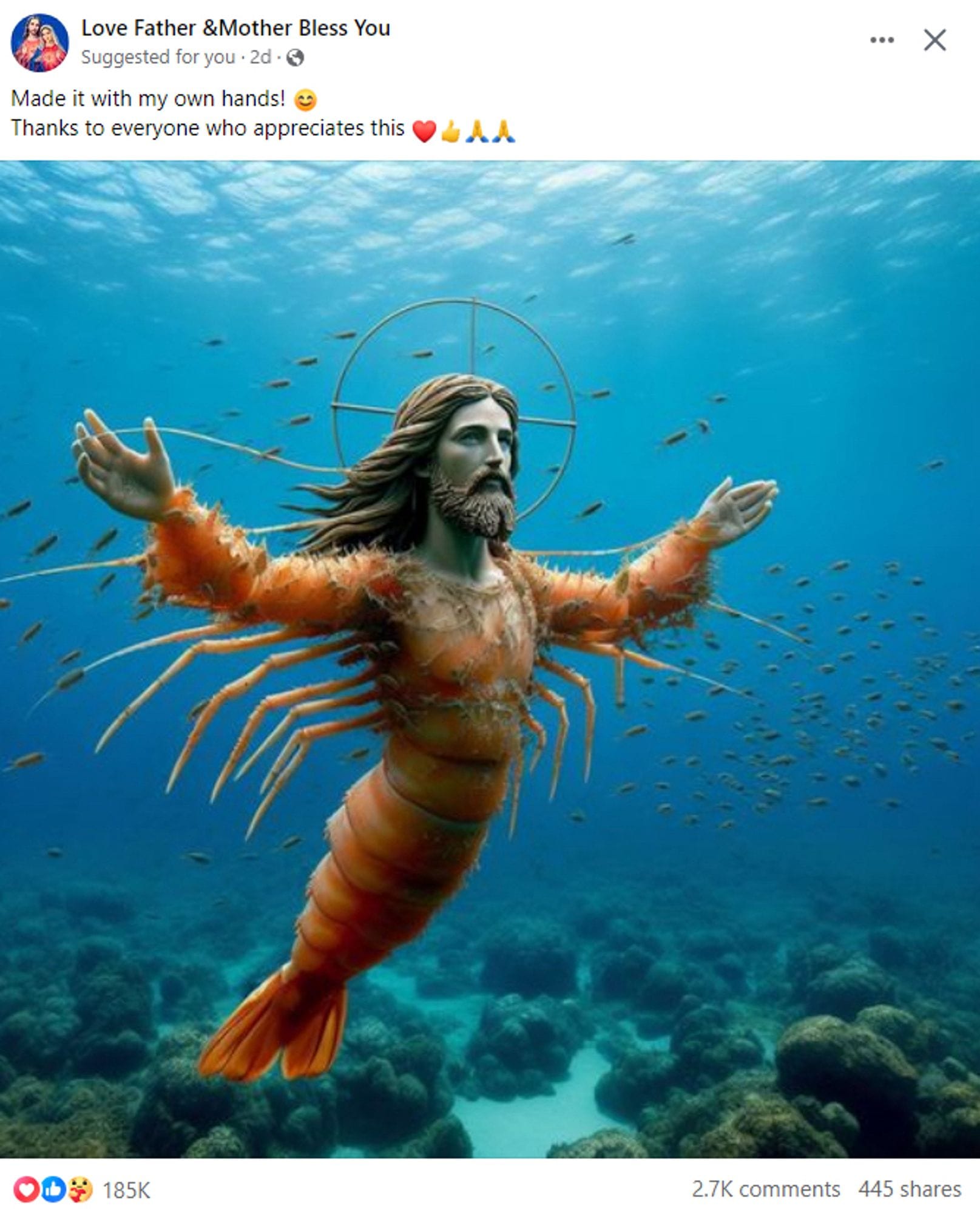
All of these strongmen would have loved DALL-E and Midjourney and the like. Even a five-year-old can create more interesting art, but these people don't want interesting, they want safe. Predictable. The most obvious thing. Even the software's occasional Dadaist turn, like Lobster Jesus, is weirdly soulless, devoid of any of the batshittery that bad or substance-impaired human artists can produce. It can only steal, and average, and since the average person prefers Thomas Kinkade to Varvara Stepanova, it will regress to Kinkade, always. It cannot surprise you with an idea unless you've never had a genuinely new idea of your own. It's mediocre propaganda at scale, minus the talent it takes to perfect Stalin's moustache, and Some More News did an amazing job of explaining its appeal to fascists, if you have an hour or so to watch a video

So maybe bad wasn't the right word. Maybe mediocre isn't either, except for a particular value of mediocre. Soulless, or aura-less, art that makes your brain work less well when you look at it. The reduction of the diversity and imaginativeness of humanity to a checklist of tropes, a Pixar plot outline, a Kinkade rendering. A story that always ends the same way, with the two main characters knowing that whatever comes next, they will face it together. The coldest of comforts to the most heartless of ghouls.

Make your bad art. But for fuck's sake, don't make any more of this.
sabotabby: (books!)
I continue to spend a non-zero amount of time arguing with AI techbros, and soft-AI supporters ("I use ChatGPT to polish up my writing" "I have my own offline LLM" "We need to have guardrails and learn how to incorporate it responsibly into education"), because yours truly is an internet masochist who regularly engages in online self-harm. Nah, actually because I think the "we should abolish it altogether" position is woefully absent in the discourse. It's possible that LLMs could go the way of NFTs (a punchline that's already getting dated) or crypto (also a punchline but with a very narrow use case for the worst people you've ever met), but only if we open the Overton Window to allow an abolitionist perspective to be let loose into the mainstream.

No one asked for this. No one likes it. No one wants it. It will make your life more annoying, not less.

The second least justifiable case* for the broad grouping of technologies called AI** is creative work—writing and art. It's already led to the mass firing of journalists, which, granted, was already happening because of capitalist consolidation. You will notice that the quality or availability of journalism has not improved! Hilariously, the economic case for this is also terrible, in that artists, writers, journalists, actors and voice actors, filmmakers, and animators already make no fucking money, and a request from an under-$200/month subscriber actually costs the companies money.*** (Is it moral to use ChatGPT to drive OpenAI out of business? Discuss.) Replacing or drowning out creative work with AI slop makes no one money and creates worse things that you have to wade through to find things made by humans.

computerspiteful
Probable source.

And yet, there are a certain number of AI "artists" or "prompt engineers" who insist that I should take their little computer pictures seriously as if it was real art. Buddy, I do not take my pictures seriously and I drew them myself. They liken what they do to collage, or sometimes Pop Art. Unfortunately for them I studied Art History and they usually shut up real quick when I tell them that my prerequisite for discussing it is them reading the entire judgment in the Warhol Estate v. Goldsmith case.

(Incidentally, I disagree with the judgment, and the last people who should be defining fair use are the ghouls of the US Supreme Court. But it's an interesting case, and one that to my non-legal mind conclusively shows that all AI "art" is in violation of US copyright law.)

My moral argument against LLMs is:
1. The catastrophic environmental cost.
2. The intellectual property theft.
3. The economic consequences of job loss.
4. The world doesn't need more shitty art.

If these people knew anything about art at all, which they don't, they might bring up fanfic rather than Pop Art. After all, we're talking about transformative work, specifically of creative intellectual property. It got me thinking, in a tangential comment on one of [personal profile] princessofgeeks 's posts, about how fanfic is the bright mirror of AI.

Because I think transformative work is good, actually. It's the main way we've had, for the entire history of humanity, to engage with story and art. The idea of a work being the sole property, for the purpose of sole profit, of the artist who created it is relatively new, and has to do with economic conditions far more than it has to do with an accurate description of the creative process.

Hence, I would pose the question: What is the difference between a fanfic of a piece of intellectual property (you can insert your own fandom here, the way [REDACTED] inserts their [REDACTED] in [REDACTED]'s [REDACTED])? After all, you are taking a thing that belongs to some other creator and making your own thing out of it.

This is where having a moral framework comes in handy.

1. Is there an environmental cost? No more than any regular activity you'd do on a computer. The energy difference between me writing this post, or my own books, and someone posting smut to AO3 is nonexistent. We all need to cut our energy use down but let's ground the private jets first, y'know?

2. Is it intellectual property theft? I would argue no, actually, and while this has been litigated a few times, people don't get sued for writing fanfic as a general rule. It's not, morally speaking, for the same reason that collage is not. No one is claiming that Hannah Höch photographed all of those magazine images she put in her collages; you are very obviously seeing found work that is repurposed, with intent, to create new meanings. Fanfic is the same—it can't exist without the acknowledgment of the authorship of the original canon. If the original canon suddenly disappeared, or was overshadowed by the fanfic, the meaning would be lost. The purpose of fanfic is to honour the original work, or subvert it, or deconstruct it; it is never to erase it.

3. It's the economic aspect that I find most interesting. Companies like OpenAI speak openly (hah) about crushing entire industries in order to somehow extract profit. Although, again, why they plan to do that with the arts, which are famously unprofitable, is beyond me. Blood from a stone. Fanfic, however, is a gift economy. That's why I call it a bright mirror. Paying for it would seem gauche; when fanwriters have tried to charge for their work, they're soundly mocked by a community of accidental anarchists.

In fact, this is a reason why fanfic writers aren't sued. Fanfic and fanart inevitably creates more income for the original creator. How many times have I checked out some show because someone has drawn an incredibly pretty, incredibly filthy illustration of the characters? A non-zero amount of times, I can tell you. If you ever write fanfic of my work I will love you forever.

4. Well, one can argue that a lot of fanfic is shitty. But because it's published, most of the time, through a parallel ecosystem, you don't actually have to wade through whatever the modern-day equivalent of My Immortal is to find an actual book. So the shitty stuff harms no one. Maybe the calculus shifts a bit with the publication of, say, Ali Hazelwood's stuff, but that's not my genre so I don't care.

Artistically, fanfic is communal and process-oriented, whereas AI slop is individualist and product-oriented. I can probably still go to AO3 and find something, within one or two clicks, that floats my boat. (Like I'd do that. I am a lazy asshole. I'd ask one of you, and you'd give me a recommendation.) To find something in the sea of slop that has any kind of artistic merit is impossible. Even if it did exist, and it doesn't, it'd be impossible to find. During one argument I had with an AI fanboy, he claimed to have rendered 100 images in the time it took for me to destroy his argument.† With one person creating that volume, how can anyone find anything?

It has never occurred to any of these people to turn to fanfic or fanart to improve on their skills. This is because they are genuinely uninterested in creative work. They don't want to be artists or writers; they want to claw themselves a little higher on the pyramid scheme, not understanding that they're the product no matter how hard they try.

It's actually because fanfic writers and fan artists exist that I have hope that the scourge of slop can be defeated. Creativity is so innate that it can thrive even in the absence of a profit motive, and for all its flaws, AO3 is an example of elegant, usable website architecture with safeguards built in against monetization. Even if everything goes wrong, we'll still be telling horny stories in the burned-out irradiated ruins, and I really love that for us.

* The worst use case for AI is anything having to do with war or police or surveillance, obviously. The immediate case for abolition is that this is used against Black and Brown people to kill them. For that reason alone, it's ethically justifiable to build a supervillain-sized magnet and take it to any data centre in your vicinity.

** To be clear, AI used to detect cancer is not the same as LLMs, and anyone trying to convince you of this doesn't want to cure cancer, they want to get every journalist fired so that the Nazi App is state media.

***  This is because capitalism does not in fact work the way they teach in business school, where companies are required to turn a profit. Companies like Uber run at a loss. Uber has never made money. It just drives the cabs out of business and defunds public transit, so you're now reliant on Uber and will eventually pay anything for the service.

† All of them looked like bad, slightly thirsty knockoffs of Coraline. This was a few weeks ago, so that aged like sour milk.

sabotabby: (lolmarx)
 I met up with a former colleague for coffee today (delightful) and she is obsessed with this terrible AI mural that I had to see, and now I am obsessed with this terrible AI mural, and now you have to see it. Here's an article. The photo in the article does not do it justice, nor does the description. I was just standing in the middle of the sidewalk, laugh-wheezing. It's so bad. It's fractal bad. Like you look at the entire thing and your brain tries to spare you, papering over the obvious gaps in reality that this thing has generated, except that it can't, and you succumb to its non-Euclidian geometry and travesties of anatomy and perspective. You look closer and there are details that compound the Uncanny Valley effect, squirming into your brainmeats until you succumb to its madness.

Like the question said former colleague had for me was had she told me nothing about it, or even pretended to like it, would I have noticed. The answer is yes, because there's an immediate unsettling aspect to it. It hadn't occurred to me that AI murals were a thing you could do, but I would have immediately clocked that something was wrong. But then you get closer. There are Dia de los Muertos skeletons, each rendered in a different style, some realist, others highly stylized, one a Coraline knockoff. The perspective of the street scene is wonky. The flowers are all rendered in different styles, with different light sources. Usually skulls have teeth, which is a problem because a lot of these just have gums. Bone gums. Hands are a challenge for most artists, including me, but skeletal hands are even harder, and these are not done successfully. The clothing is nonsensical, in one place appearing to melt away, exposing a gaping wound. There's a guitar, unfortunately, because AI does a very bad job with stringed instruments. 

My favourite is a donkey. The donkey occupies the same space as the one-point perspective street, but exists in a different dimension, because it has a huge head and tiny little forelegs, and I couldn't stop straight-up giggling over how bonkers this donkey looked. It's glorious. Holy shit.

The good news is that this is possibly a sufficient outrage to wake Diego Rivera's corpse from its eternal slumber so maybe we'll get some decent art out of that. And also terrible publicity for the restaurant that will serve as a warning to others. Someone has already painted "hire human artists" on it so the community's opinion has been made clear.
sabotabby: two lisa frank style kittens with a zizek quote (trash can of ideology)
[personal profile] blogcutter asked "What do you think about Australia prohibiting social media for the under-16 set?

Can our postal service (snail mail) be saved? Would postal banking help? And would it maybe get rid of all those payday loan shops that are a blight on our urban landscape??

How do kids' and people's hobbies change from one generation to the next? What are the practically obsolete ones (stamp collecting? penpals?), the current ones like online gaming, and the emerging ones or the ones we haven't yet seen?"

Those are all really good questions.

Social media ban for kids

I'll start with three statements, which I believe to be true but which are also contradictory.

1) Social media corporations and Big Tech in general are evil and actively detrimental to the existence of life on earth.
2) Children are human beings and deserving of freedom, autonomy, political opinions, and privacy, albeit at a graduated basis based on their maturity (not necessarily the same as their numerical age).
3) The fact that I can go on the internet and encounter the opinion of a 15-year-old is a crime against humanity.

Which is to say that it's complicated. And also basically impossible. I would like them to ban Nazis from social media, and of course they can't manage to do that, so there is not really any way to stop a semi-intelligent 15-year-old with a VPN from avoiding the ban.

While I do think that social media is harmful to kids (and here I would already get more nuanced, because Tumblr is social media, but it's not harmful in the way that Instagram is harmful, and Instagram is not necessarily harmful to all kids), I don't for a second believe that Australia's social media ban, or any other proposed social media ban, has much to do with actually protecting kids. I think it has to do with fear that kids could turn out to be trans, or support Palestine, or learn that their government did and continues to be involved in horrific genocides. "What about the children!" has been a rallying cry since time immemorial for people to shut off their brains and get on board with the latest moral panic, and especially with one of the most slovenly pseudo-researchers of our age, Jonathan Haidt, cited as the eternal expert on this, I just don't trust these people.

I also believe that social media addiction is a symptom of a deeper problem, which is a lack of community connection and public space. That's why it worsened over covid. We long for connection with others. Neoliberalism has restricted the sphere of the public—where are the parks? The community centres? The union meeting halls? The community concerts and dances?—and this goes even further for adolescents, who don't even have a mall to loiter in anymore.

Normal kids would much rather spend time with their friends in meatspace, but we don't let them do that anymore, do we? Scoff at the hosedrinking Gen Xers all you like but at least we were able to walk to school and stay at home by ourselves without our parents being arrested for child neglect. We went to all-ages shows and got fake IDs and went to better shows, we drank underage, and we were mostly better adjusted for it. It worries me much more that none of my students have fake IDs to get into punk shows than it does that they spend time on TikTok, which is one of the few paths of affordable entertainment and socialization open to them.

Furthermore, we have eroded education into credentialing. Kids don't get involved in extracurriculars because they love it and want to meet new friends; they do it because they're resume-padding to get into competitive programs. They're over-scheduled and under-challenged. They're both over- and under-parented. They have no privacy. Their only space to be themselves is to take their phone into the bathroom—the one place where there's probably not a camera—and sneak an un-surveilled conversation with a friend. So of course they get addicted to their one escape.

I often complain that my senior students don't know history, which is to say that there is one compulsory history class, in Grade 10, and it mostly covers WWI. When I ask them what they learned outside of school, the only ones who know anything that has happened ever in human history—let alone contemporary politics—are the ones who spend a lot of time on Tumblr, Reddit, and TikTok (formerly Twitter but now they just get Nazis). That's not to say that every kid is using social media for that, just that social media is filling in for where institutions have failed miserably.

I would love to see more regulation and breaking up of Big Tech monopolies—I think that would create a stronger, more diverse social media landscape. And I'd like to see the traditional media regain its credibility and staffing. I think if we opened up the black box fuelling algorithms it would create positive change for all of us, not just kids. Because as harmful as social media can be for under-16-year-olds, it's not as bad as the genocides that Facebook encouraged adults to perpetrate in Myanmar and Ethiopia.

I also think we should concentrate on harm reduction and teach responsibility rather than ban things.

For more thoughts on this, [personal profile] selki posted this great nuanced episode of Tech Won't Save Us, where Paris Marx interviews Australian journalist Cam Wilson, and it sums up a lot of my feelings as well.

Saving Snail Mail

I love snail mail and I love posties and Canada Post is in fact a very good idea even if its current management can go fuck itself. Full support to Canada Post workers even though I have several cool things in the mail that I would really like to get sometime soon.

I like the idea of postal banking a lot, and this would bring infrastructure to remote parts of the country. Apparently it works really well in Japan. So yes, I'm in favour of that. If it gets ride of payday loan places, so much the better.

I also think that things like mail are necessary for civilization and we shouldn't cede them to Amazon.

Uhh that's about all I got on that one.

Hobbies

You know, when I ask the kids what their hobbies are, they claim to not have any. That's been the case for my entire teaching career though. I'm not sure I conceived of my hobbies as hobbies when I was that age either.

I would say gaming takes up most of their time. Which makes sense—it is very time-consuming and immersive, it can be both social and allow for social avoidance, and there's such a variety that it appeals to all of their interests.

They're individuals, though. Some of them like sports, of course; some enjoy cooking or baking, others podcast or make YouTube videos, some hunt and fish, some build and paint miniatures. I can't generalize. I don't think any collect stamps but a lot collect things like plushies or those awful Funko Pops. Penpals I'd say might still exist in a sense, as some of them have internet friends, which I think is the same thing but you don't have to pay for a stamp.
sabotabby: two lisa frank style kittens with a zizek quote (trash can of ideology)
I sometimes say if I had more charisma and looser morals I'd make an excellent grifter and here's a good example.

When I was 17, I was taking a course in chaos theory and fractals (yeah my school was cooler than yours) and we had to do a project on probability. I decided to build a computer program to simulate whether in fact an infinite number of monkeys on an infinite number of typewriters would eventually produce Hamlet. This was before I had internet access and I didn't know a thing about computer programming, but an older friend had recently dropped out of college to work as a programmer, so I enlisted their help. We designed a program that would take a bunch of words (we tipped the scales a little by using the text of Shakespeare plays and whatever other easily available digital text we could find in 1996) and gave it some basic grammar rules about what a sentence looked like. We then had it spit out sentences. Our favourite, and shortest, was "Congress lied." Eventually, I theorized, you could refine it so that it would spit out something that looked like human writing.

So yes, when I was 17 and dumb as shit I invented ChatGPT. Probably lots of people did. It never occurred to me to monetize it, which is one of the many reasons I'm not a billionaire and neither is that friend.
sabotabby: plain text icon that says first as shitpost, second as farce (shitpost)
 I keep going back to this essay, over and over again, as it's the best thing I've read all week and if you haven't read it, that means I get to be the one to tell you about it.

You're welcome.
sabotabby: raccoon anarchy symbol (luke cage)
• I'm going to be reviewing Luke Cage over at [livejournal.com profile] terror_scifi. I just posted the first review, and I'll try to keep it to a weekly schedule if school permits. Incidentally I'm only two and a half episodes in and trying to avoid spoilers, so if you binge-watched it this weekend, try to keep schtum, okay?

• It's been an epic time of concerts. There are more concerts than I can reasonably attend given that I have this annoying need to work for money and such, but I am still managing to hit a lot of concerts. Legendary Pink Dots last Tuesday, the Levellers on Friday, Billy Bragg next Tuesday, and Stiff Little Fingers, Tanya Tagaq, Peter Hook, and Dido and Aeneas all in the near future.

I can't stress enough how completely brilliant the Levellers were. I've never seen them live before, and they were just incredible. I ended up right at the front and danced for like two hours straight.

• Went to the big $15 and Fairness demo on Saturday. It was worth attending.

• I think the pedometer on my phone is fucked. It's seriously undercounting my steps compared to what I'm used to, except for at the Levellers show, where it thought I somehow walked 7000 steps during the time I was inside the Opera House. I checked all the things that it could possibly be and they were all functioning normally, which lead me to the conclusion that Apple wants me to buy a new phone but since I don't want to do that, Apple's going to end up with me buying a Fitbit instead.

• L'shana tova to everyone celebrating it.
sabotabby: raccoon anarchy symbol (go fuck yourself)
There's so much stupid out there, and it's hard to know when to start when savagely mocking things, even without the US elections stealing a problematic plot point from an episode of Doctor Who. But here are three things that made me roll my eyes so hard that simply a link and a snarky remark on FB was not enough.

1. Facebook, as you probably heard, took down a post from a Norwegian daily featuring the famous photo of Phan Thị Kim Phúc, best known as the "napalm girl," but be a decent person and call her by her name, okay?  Espen Egil Hansen, the editor-in-chief of Aftenposten, retaliated brilliantly, as you can read here, and eventually Facebook did relent. However, their justification—that is is just too much effort to distinguish between one of the most famous photographs of all time depicting a massive political turning point and child pornography—is what's hella stupid.

Fortunately, I don't need to do a takedown of the whole thing, because Dan Hon did it rather beautifully here, and do take some time to read that post, because it's great and includes one of the most awesome trigger warnings I've ever seen on an online article. But the key takeaway is encapsulated quite nicely here:

Facebook - and, more or less, Silicon Valley, in terms of the way that the Valley talks about itself, presents itself and so-on - is built on and prides itself in solving Difficult Problems. At least, they are now. Facebook is a multi-billion dollar public company where *some* things are difficult and worth doing (e.g. Internet access to 1bn people using custom-built drones, but other things are, by implication, *TOO HARD* and don't warrant the effort.
I was going on at great length yesterday to a friend about my hatred of Facebook's sorting algorithm, and how it can cause some friends to disappear and some to become disproportionately prominent, and make you feel as though no one is listening to you and you're shouting into a void when it decides it doesn't like one of your posts. (It's bad enough when it happens on FB; worse when it happens in cases like hiring practices or policing techniques; we are increasingly delegating large parts of our lives to supposedly objective technology that's created by subjective, and generally speaking, racist, humans.) LJ solved this particular problem in a very simple way, by showing you every post by every friend in the order that they posted it, without continuous scrolling. Now, obviously, this doesn't fit with FB's business model at all, or the way that most people use it, but it does show that the problem can be solved.

Historically, we have not asked big monstrous corporations to solve all of the world's problems, but Silicon Valley seems determined to solve all the world's problems, or at least "disrupt" and create problems where there weren't any problems before. And we seem willing to surrender the questions of what problems exist, and which are worth solving, to them, which is why the US seems to have delegated creating its educational policy to Bill Gates, of all people. Which brings me to a tangential point raised by someone in the BoingBoing forums: At what point do we make a distinction between the traditional definition of free speech being freedom from government repression, and start being honest about the control over the discourse that corporations get. At what point is Facebook equivalent to or more powerful than a state actor? I think we're there; Facebook is the primary news source for a huge chunk of the population, and at some point we need to force it to act responsibly or force it to abdicate this role.

Anyway, fucking stupid. Hire some humans who can distinguish between a black-and-white news photo of a naked child on fire and actual porn, and pay them a living wage.

2. SPEAKING OF A LIVING WAGE...Okay, I've mocked this to shit already today but I'm not done mocking, no I am not.  Via Everyday Feminism, currently vying with Upworthy for the Worst Place On the Internet: 20 Ways to Help Your Employees Struggling with Food Insecurity and Hunger.

Now, for a site that claims to be all about accessibility, EF is slightly less accessible than, say, Alex Jones after 72 hours of substituting Red Bull, vodka, and crystal meth cocktails for sleep, which is to say it's one of the worst-written sites I've ever seen. I'm guessing they don't have paid editors. Every article is skimmable at best, and tends to amount to: "Be gentle, check your privilege, and don't forget to self-care with your yogurt." But this is possibly the worst article of every bad article I've ever read there, because not one of these 20 ways is "pay your employees a living wage."

Because, sorry. A minimum wage is supposed to be a living wage, and if your employees are on food stamps, you are not paying them enough. If you "can't afford" to pay them enough, as EF suggested in their equally ludicrous rebuttal to the criticism this article garnered, you are a shitty businessperson and deserve to go bankrupt. And if you have the time and money to learn about your employee's food sensitivities—again, you are not paying them enough, and hardworking taxpayers should not be expected to subsidize your lack of business acumen.

Should you be in the odd position where you cannot control how much you pay your employees (let's say you're the just-above-minimum-wage manager of a McDonald's, though if you were, I'm not sure why food sensitivities would be an issue), plenty of helpful friendly unions would be happy to come and visit your employees and assist them in organizing to get their wages raised.

Also, they include the worst suggestion of all time, which is to load up on meat-lovers pizza. Please do not do this, whether your workers are starving or not. In 100% of catered work events I have attended, the "meat-lovers" go right for the paltry vegetarian options and eat it all up before the vegetarians can get to it.

3. Finally, let's talk about architecture. Check out York U's new building! Now, York U is already the repository for a collection of the worst architectural trends in the last half-century (as is Toronto in general; we spawned Frank Gehry, after all) but this one is just too hilarious to be believed. It's like the Edgy White Liberal of buildings. You can practically see the #hashtags in #every #sentence in that #puffpiece.

Guess what, starchitects. People figured out hundreds of years ago how to make buildings work, and you can't improve on it all that much. Human beings like to feel relatively contained, and more importantly, like their ambient noise to be contained, particularly in places where they're supposed to work or study. That's why universities have quaint, outmoded features like "classrooms" and "lecture halls." Ever tried to work in an open concept office? It's distracting as anything. I'm all for less productivity—productivity is one of the Great Lies of late-stage capitalism—but I would rather be unproductive on my own terms. And common areas for meeting with students? When students want to meet with me outside of class time, it's quite often to tell me that they're struggling with family or workload or mental health issues, so why not just shout that all over the #learningspaces where the whole #engineering program can hear it?

Plus, like every building erected in the last 20 years, it looks like the architect gave up, crumpled the blueprints, and submitted the balled-up paper as the actual design.

Kill it with fucking fire.
sabotabby: (books!)
You know what's great?

Books that are printed on paper.

You know why?

Because I can open up a 100-year-old paper book and it will still work the way it's supposed to. Unlike, say, my three-year-old Sony Reader, which now does not work because it's incompatible with Adobe Digital Editions and the Sony Reader software is incompatible with the new Mac OS, and Calibre, which is open source, can't manage library e-books. The device can't download from the library directly because it's full of garbage that Sony put on there and slow as shit to boot.

So now I can only read e-books that I steal or buy. Which is not something I'm in the habit of doing.

Thanks, capitalism!
sabotabby: raccoon anarchy symbol (sabo-kitty)
Today was another exciting day at Mini Maker Faire. On the downside, I was really tired and the Christie bus was not as cooperative as it was yesterday in terms of getting me there at a reasonable hour and it was even more crowded than yesterday. On the plus side, a lot more of my friends were in attendance. I only caught one talk, which was about video remixing—something I'm interested in, but unfortunately the project in question was a bit weaksauce.

One of the groups that wasn't there yesterday makes life-size, functional Star Wars droids, because why not?

r2d2 photo 993337_10153275746480612_1012207130_n_zps08d22b96.jpg

droids photo 1017483_10153275743420612_1136920734_n_zps99efecac.jpg

 photo 1185022_10153275923540612_1982829483_n_zps0bd4fd1f.jpg
As far as I can tell, this was just a sculpture, but it was pretty cool.

mechanical hand photo 1236641_10153275927990612_3521896_n_zps37ec37ca.jpg
A mechanical hand. Again, if you can, why wouldn't you?

 photo 1186129_10153275533255612_318433526_n_zps5479157b.jpg
A lockpicking workshop for kids seems a bit Oliver Twist to me, but hey, I don't judge.

This was my favourite: liquid nitrogen ice cream. It's badass and tasty:

ice cream 1 photo 599292_10153275540700612_421003325_n_zpsda1e5caf.jpg

ice cream 2 photo 1237040_10153275575820612_2044516511_n_zps472535a4.jpg

If you're wondering, it tastes just like regular ice cream, but it has smoke rising from it.

Not pictured: laser tag, various arcades, and all of the 3D printed stuff.

I am completely exhausted but it was so worthwhile.
sabotabby: raccoon anarchy symbol (d is for dirigible)
I spent today at Toronto Mini Maker Faire, held at Wychwood Barns. There was some incredibly cool stuff on display; largely 3D printers and Arduino, but also robots, glass-blowing, fire, music, and miscellaneous awesomeness.

Sorry for the crappy quality of these photos; I took them with my cell. It wouldn't have done much good to haul my actual camera there, since it was quite crowded and it was already fairly hard to juggle all the stuff I was picking up, plus my umbrella and cane.

 photo 1374080_10153271814825612_264167815_n_zpsa999e7d4.jpg
Here's a vintage typewriter modified to tweet whatever you type on it.

weevil eye photo 1157591_10153272361005612_1722107102_n_zpsb0d99596.jpg
I re-learned how to solder by making this little guy, called the Weevil Eye. He has a light sensor, so his LED eyes light up when it's dark (or when you create a shadow by waving a hand or other object over the sensor). Not sure what I'm going to do with him other than use him to demonstrate circuitry and soldering to my kids, but I think he'd make a good brooch.

I sat in on a number of interesting talks. I caught most of one by the Toronto Tool Library, which—I am so happy about this—is opening up a makerspace down the street from me. The talk was mostly about post-scarcity economics and politically quite up my alley, so I went up to them and introduced myself afterwards and signed up for their mailing list. The space opens in a few weeks. It'll be great for me because it's close enough that I can easily drop by after school—much more convenient than Site3—but it's also a potential field trip to take my kids on.

alex's rainbow gun photo 1234424_10153272049715612_1742952378_n_zps5e073a47.jpg
This was a talk by Alex Leitch about her flamethrower that shoots rainbow fire. She estimates that this current incarnation of the Rainbow Gun is about 60% to completion. It was a talk that was very relevant to my interests.

creepy severed head on a table photo 535899_10153272224855612_71467611_n_zps4741498e.jpg
This actually wasn't at Maker Faire, but across the street. I think it's an interesting way for a hairdresser to advertise.

I also scored an utterly gorgeous blown glass tentacle necklace, which I'm wearing at the moment. The one obviously non-electronics person there was a woman who makes sea creature glass jewellery with a blowtorch. It was nice stuff but not totally up my alley—lots of hearts and fish. On a lark, I asked her if she made any with tentacles and it turned out that she had a pile of tentacles that for whatever reason she didn't put on display. Because there's no way anyone at a Maker Faire would be interested in tentacles.

I also got filmed for two separate TV shows. So, uh. I might be on TV. Hopefully they'll contact me so I can post it in a locked post and you can share my utter embarrassment.

Anyway, it was a fabulous day. It was one of those crowds where it was cool to strike up a random conversation with anyone (in my case, generally anyone sitting next to me or hanging out at an interesting display) and they would turn out to be completely fascinating. I made a few good contacts and generally came out feeling exhausted by excited. Looking forward very much to tomorrow.
sabotabby: raccoon anarchy symbol (scriabin)
Electronic music. Communism. Alexander Nikolayevich Scriabin. Futurism. Alchemy and the occult.

There are a few times that I've wished that I were more mechanically and musically inclined. Alas, I lack the talent to ever build one, though given that it's played by drawing, I'm pretty sure I could actually play one.

ETA: Here it is being played (starts at around 4:17):

sabotabby: raccoon anarchy symbol (teh interwebs)
I don't know if this happens to you, but it happens to me a lot, because despite my general curmudgeonliness, I am perceived to be some sort of gadget geek, early adopter, phone asshole. (Note: I hate phones, I can't figure out what tablets are for and thus hate them, and I'm agnostic on e-readers.) Whenever friends or acquaintances get some sort of new device, they immediately hand it to me and unlock it. And then I'm super-awkward, because isn't that just like poking around on someone's computer? I don't want people poking around on my computer, or on my cell. But other people are always inviting me to dick with their cells.

Anyway, I never know what to do. I assume if there's a particularly interesting app, they would show it to me, but when they do this, they seem to want me to just randomly poke at apps. Is this what people do? I have a smart phone but the apps I actually use are minimal: I have one for the intertubes, several for my e-mail, FB, Tumblr, (not LJ, because LJ's mobile app sucks monkey balls), a calendar, a calculator, a contact list, and a map thing. I hear it can make phone calls too. At any rate, I really don't think anyone is interested in playing with these apps unless they happen to be me. I don't have any games, and when people hand me their gadgets, I never really know where to find the games or how to play them. The last time someone handed me a tablet, I found the camera function and started snapping pictures of random people until he finally took it back.

Basically, this is one of those situations where I completely fail at social interaction. When someone hands me a gadget they might as well hand me a baby. I just gape at it and say, "ooh shiny."

So what do you do?

[Poll #1817413]
sabotabby: (books!)
I used to know a guy who hung around anarchist and other activist circles when I was involved with the Anarchist Free Space back in 2001. Weird guy. We didn't get along at all, to the point where he came close to decking me over an ideological disagreement. He wasn't really an anarchist—in fact, he professed no great objection to capitalism as an economic system—but he couldn't find any takers for his bizarrely specific politics anywhere else, and anarchists are too antiauthoritarian to exclude someone from their collectives just because the person is potentially violent, doesn't share any of their ideals, blocks consensus, and is unconcerned with piddly things like personal hygiene.

This guy was the founder and sole member of a committee against technology. Don't get me wrong—he was neither a Luddite nor an anti-civ or primitivist anarchist (though I hate those guys too, don't get me started). He did not object to the technology that produced his glasses, the clothes he wore, the photocopied pamphlets he distributed. Rather, he had been laid off back in the 80s, replaced by a primitive computer, and so any technology developed subsequently was responsible for massive job loss and the destruction of humanity.

Reading Sherry Turkle's Alone Together: Why We Expect More From Technology and Less From Each Other, I kept being reminded of that guy. It's not that Turkle's a Luddite. It's more that she's terrified of the future, of obsolescence and irrelevance. The technology that her generation is comfortable with is just fine; the technology used by Kids These Days With Their Cellphones and Baggy Pants is going to destroy civilization as we know it.

Or something. Turkle talks a lot about the negative impact of technology on individuals, that it makes us more depressed and doesn't solve our problems, but devotes perhaps a paragraph to some vaguely worded solutions for an issue that I'm not entirely convinced exists. Nor does she amuse me by painting a vivid picture of a future Gattaca or 1984. No, she talks about sad stories of people who feel isolated or overwhelmed by technology. Occasionally, she offers a counter opinion, only to counter it with, "but is this really what we want?" Criticizing this book feels like throwing darts at Jello—there's nothing solid to even attack.

Alone Together is actually two books. One is about how robots, specifically sociable robots (I don't think Turkle objects to the robots that, say, make the car she presumably drives), are evil and are going to replace people. They will start by replacing caregivers for children and the elderly and become romantic companions for people with robot fetishes, and eventually we'll just take them for granted and even prefer them to people. The second half of the book is about social networking technologies, and in particular cell phones. Turkle isn't really a fan of those either.

A massive flaw in the book is the lack of hard facts. She's obviously done research—she's a professor at MIT after all—but much of the information in the book reads to me as incredibly anecdotal, culled from an admittedly extensive series of interviews. These interviews seem skewed towards WEIRD, and the upper-middle to upper class segment of the WEIRD population (she interviewed vastly more private school than public school students in the second half of the book, for example), and selected for a particular level of neurosis. Without stats, I have no way of determining how broad her sample is. Most of the people she talks about seem rather broken, even by my standards—abandoned children, abandoned seniors, WoW addicts, and so on. And I feel that she imposes her own neurosis on the interviews, condescending to her subjects and sounding for all the world like a concerned Jewish mother.

I'm not qualified to quibble with her discussion of robotics, which would be vastly more interesting if sociable robots were as advanced and widely used as she seems to think they are, and also if scientists had already invented a way to bridge the Uncanny Valley. I still don't buy her argument that there is a substantial difference between the way a child interacts with a Furby or Tamagotchi and the way a child interacts with some other favourite toy. She describes children experiencing severe confusion, anxiety, and overidentification with robotic toys, but I've honestly seen kids act the same way if they think a stuffed animal has gotten lost or damaged. And while I do think there are people out there who would prefer a robotic lover over a human one, I'm not sure that there's any harm in it, as they are not generally people who would be getting laid without robots.

The social networking part is what I really read the book for. You all know that I love long-form blogging, loathe Twitter, use Facebook only grudgingly, and can't figure out what to do with G+ or Tumblr.* I get frustrated when my kids are more interested in their cellphones than in my scintillating lessons. I am suspicious of e-readers, particularly those that can't manage to get line length correct. I like getting stuff in the mail, I don't own a TV, and if you phone me for no good reason, I resent it. What I'm saying is that my relationship with social technology is complicated.**

So is Turkle's, except that she won't admit it. She likes the phone a lot. Texting, e-mail, and IM are all dangerous technologies, because you can multitask rather than devote your full attention to the other person, leading to social isolation. Phones are great, though, because they mean that you are giving the person your undivided attention. Especially if it's a landline. Because apparently people never multitask while on the phone. (Pro-tip: If I've been talking to you on the phone longer than five minutes, landline or not, regardless of how much I like you, it's guaranteed I am looking at pictures of cats on the internet. And I assume that you are too.) Never mind that phones also interrupt family dinners, that they replace more "authentic" communication like face-to-face contact or handwritten letters—landlines are what Turkle's generation are comfortable with, so it is good, personal technology. Skype, which actually does guarantee undivided attention (I mean, I'm still looking at cat pictures, but Skype means I've actually made a plan to talk to someone and that someone can see if I'm not mentally present), is somehow bad because theoretically you can Skype from a cell phone, so you may be lying about your location. It's a kind of logic that isn't.

Turkle has a curious relationship with the idea of real time. Phones are real-time technology, which is why one of the reasons I hate them and she views them as authentic, allowing you to be honest and not edit. Facebook, blogs, and e-mail are not real-time, and so you create an avatar, presenting an idealized self that is edited for public consumption. She spends a lot of time extolling the virtue of the authentic, unedited self, while telling stories of teenagers who agonize about what information to include in a Facebook profile. And yet at the end, complaining about regular Skype conversations with her daughter, she waxes nostalgic for letters and scrapbooking—edited memory, and no different in my mind to a teenager deciding to remove his zits in Photoshop or to not post that picture where she's wearing sweatpants around the house.

The author professes a good deal of concern for marginalized people, particularly the elderly and disabled (she's so much of a disability ally that she refers to one of her friends as "confined to a wheelchair"!). And yet she dismisses their voices. Again and again, it becomes clear that the dichotomy she poses is often not between a human caregiver and a mechanical/distant one, but between the mechanical/distant and nothing at all. (Though she denies this, and vaguely suggests at a paradigm shift, with a grand total of one worthwhile suggestion, which is to pay caregivers more.) Depressed people who now use PostSecret or anonymous memes to cry out for help did not, in the past, go around the corner to cry on a neighbour's shoulder. They suffered in isolation or killed themselves. The technology that she views as inherently isolating is, for people like me, incredibly liberating. If I ever end up in a position where I need to use a bedpan, you're damned right I want a robot rather than a human to change it.

The thing is, there's some value in this book. Certainly, an argument can be made around the addictiveness of technology (Turkle dismisses the addiction model, though), the shifting paradigms around privacy and anonymity, the extension of the working day through always-on technology (except Marx basically made that argument, more coherently and way before cellphones were invented), but every time she starts to get close to those arguments, there's another really cringeworthy personal anecdote coupled with a vague warning. Whatever point she's making is lost through a sheer lack of logic and consistency.

Incidentally, she's a tremendous hypocrite, and here's a low blow. This book was published in 2010. The author, who insists on authentic, hands-on human interaction and sighs over girls who make their Facebook profile pictures thinner, was born in 1948. So this is the avatar—I'm sorry, the author photo—she presents to the world on her book jacket:


There is nothing wrong with what she actually looks like. I mean, I hope I look this good at 62:


I'm just saying that presenting something other than your tangible physical presence, warts and all, is nothing new, and predates Photoshop, Facebook, and Second Life avatars. We all do it. My generation, and my kids' generation, is simply more conscious of the presentation of multiple selves, the illusion of privacy, and the fact that there may just not be anything all that special to being human.

Oh, and that anti-technology guy? Saw him last weekend, handing out the same pamphlets at the Occupy Toronto camp. You know, that protest that's part of a global movement that only exists because of widespread access to newfangled things like the internet and cell phones. The one where, in some cities, innovative activists have created bicycle-powered generators to power their laptops and allow them to share ideas, strategies, and create communities with likeminded people all over the world. So there's that.

* I'm going to point you in the direction of my favourite Tumblr of the moment: Yo, Is This Racist? I want to buy that person a drink. Several drinks, maybe.

** In other news, it's not my imagination that analog really does sound better, is it? /hipster douchebag

† I'm trying, and failing, to think of more than a handful of my kids doing this. They just put everything up and don't care if people know they like geek shit. Everyone likes geek shit.
sabotabby: raccoon anarchy symbol (tom waits)
The Guardian interviews Tom Waits. Who, bless his soul, has this to say:
"They have removed the struggle to find anything. And therefore there is no genuine sense of discovery. Struggle is the first thing we know getting along the birth canal, out in the world. It's pretty basic. Book store owners and record store owners used to be oracles, in that way; you'd go in this dusty old place and they might point you toward something that would change your life. All that's gone."

Does he ever stray online?

"No," he says. "But then I'm one of those guys that is still a bit afraid of the telephone, its implications for conversation. I still wonder if the jukebox might be the death of live music."


He is afraid of the phone, you guys! As everyone rightly should be.
sabotabby: raccoon anarchy symbol (march)
I am, as usual, running out the door, but I'll just drop off a few things here.

So I pimped up Mac the Knife:

mac the knife,this machine kills facists

I am glad that Etsy exists so that my demographic can be pandered to. My demographic being 30-something Mac users who are into Woodie Guthrie.

When I was dumping that photo off my camera, I also found the one photo I took during the G20 Redux rally:

the unruly populace must be punished,g20

And I know you guys all like space whales (warning: TVTropes link) as much as I do (except [livejournal.com profile] ed_rex, who hates space whales and also America and freedom), so you will be pleased to know that there is a Tumblr called Fuck Yeah Space Whales. Space whales are the greatest thing in skiffy. Seriously, any decently written space whale story, regardless of whatever flaws exist in it, will almost always bring me to tears. My love for space whales is not even remotely ironic.

Which reminds me that I'm long overdue for my post about narrative kinks. The last massive narrative kink list I posted was like seven years ago before I'd heard of steampunk. I have some new ones now.
sabotabby: raccoon anarchy symbol (eat flaming death)
Please stop reporting on issues involving technology and teenagers until you can do it properly.

(I wish they'd stop texting all the time too, but this is just silly.)

[Poll #1642709]

ETA: Previous entry deleted owing to the fact that he totally said "sexting" but my eyes glossed over it.

Profile

sabotabby: raccoon anarchy symbol (Default)
sabotabby

January 2026

S M T W T F S
    1 23
4 5678910
11121314151617
18192021222324
25262728293031

Style Credit

Syndicate

RSS Atom
Page generated Jan. 5th, 2026 12:58 pm
Powered by Dreamwidth Studios

Expand Cut Tags

No cut tags

Most Popular Tags